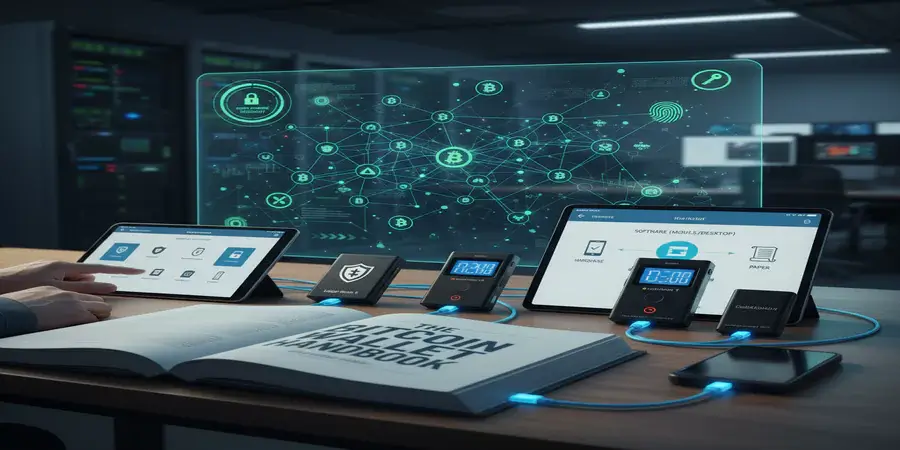
Corporate treasurers are no longer debating whether digital assets belong in business operations. The question has shifted to how fast they can implement these systems before competitors gain the upper hand. The conversation around choosing the best crypto wallet has moved from retail investors to boardrooms, where finance teams now evaluate custody solutions that handle millions in tokenized payments. This marks a fundamental change in how companies think about moving money and settling obligations.
Traditional payment systems carry built-in delays that nobody questions anymore. Wire transfers take days to clear. International payments bounce through correspondent banks. These friction points add up to real costs, but more importantly, they lock capital in transit when companies could be putting it to work. Blockchain-based payment infrastructure removes many of these bottlenecks by operating outside banking hours and providing visibility that legacy systems never offered.
Why Speed Alone Doesn’t Tell the Full Story
The benefits go beyond faster settlement times. When payments move on distributed ledgers, they carry information that traditional wire transfers can’t embed. A blockchain transaction can include invoice data, delivery confirmations, and compliance checks all in one package. This creates an atomic settlement, where multiple conditions must be met before value transfers. For businesses, this means fewer disputes and tighter control over working capital.
Stablecoins and tokenized deposits give corporations access to round-the-clock payment rails that work regardless of banking holidays or time zones. A manufacturer in Ohio can pay a parts supplier in Vietnam at 2 AM on a Sunday, and both parties see the settlement immediately. The treasury team doesn’t wait until Monday morning to confirm whether the funds have cleared.
The real transformation happens when companies stop thinking about blockchain as just another payment method and start treating it as infrastructure for value itself. This is where tokenization enters the picture.
Assets Become Fluid Through Tokenization
Tokenization takes something that exists in the physical or legal world and represents it as a digital token on a blockchain. That could be a receivable, a purchase order, or equipment ownership. Once tokenized, these assets can move between parties with the same ease as sending an email.
Picture a construction company that needs to pay subcontractors based on project milestones. Under current systems, the general contractor reviews work, approves payment, initiates a wire transfer, and the subcontractor waits several days for funds. With tokenized payment obligations, the moment an inspector verifies milestone completion, a smart contract releases tokens to the subcontractor’s wallet. Those tokens represent actual value that the subcontractor can immediately deploy elsewhere.
This fluidity changes corporate finance from a static accounting exercise into dynamic capital management. Receivables that used to sit on balance sheets for 30 or 60 days can be converted into tokens and traded within hours. A vendor’s invoice transforms into a token that carries payment terms, delivery schedules, and settlement logic, all verified on a shared ledger that both parties trust.
Three Shifts That Redefine Inter-Company Value Flow
Information asymmetry drops substantially when transactions occur on shared ledgers that authorized parties can view. Everyone sees the same data at the same time. Disputes about whether payment was sent, received, or applied correctly become rare. Auditors can verify transactions without requesting bank statements. This level of transparency builds trust between companies that may have never worked together before.
Payments become conditional and automated through smart contracts that embed business logic directly into transactions. A token might only transfer when goods arrive at a specific location or when quality inspection passes certain thresholds. Treasury teams program these conditions once, and then the system executes automatically.
Capital trapped in the settlement cycle becomes accessible. Traditional B2B payments create a gap between when a buyer initiates payment and when a seller can use those funds. Blockchain settlement compresses this gap to near zero. Companies can recycle capital multiple times per day instead of waiting for clearing periods.
What Stands Between Promise and Practice
Moving toward crypto-enabled business transactions requires more than installing new software. Companies face interoperability challenges when different blockchain networks can’t communicate smoothly. A payment token on one ledger may not be recognized on another, which fragments liquidity. Industry groups are working on standards, but widespread adoption will take coordination.
Regulatory clarity remains uneven across jurisdictions. Some countries have established frameworks for digital assets, while others leave companies guessing about compliance. Finance teams must navigate AML requirements, securities regulations, and payment system oversight, all while dealing with technology that regulators are still learning to classify.
Internal capabilities matter too. Integrating blockchain payment systems with existing platforms, training treasury staff, and updating internal controls all require investment. Companies that treat this as purely an IT project will struggle.
Where This Trajectory Leads
The business transaction landscape five years from now will likely feature hybrid systems where traditional banking coexists with blockchain rails. Companies will route payments through different channels based on speed, cost, and regulatory requirements. Supply chain financing could shift almost entirely to blockchain platforms where tokens represent goods, invoices, and payment obligations simultaneously.
Corporate wallets will become standard treasury tools, sitting alongside bank accounts. These digital custody solutions will handle tokenized securities, trade finance instruments, and programmable payment obligations. The finance function will operate more like a real-time operation than a back-office department.
Moving Forward
Blockchain payments and tokenization are rewriting how companies exchange value. The combination creates infrastructure for faster settlement, programmable money, and dynamic capital management that legacy systems can’t match. Companies that integrate these capabilities early will operate with advantages their competitors can’t easily replicate.